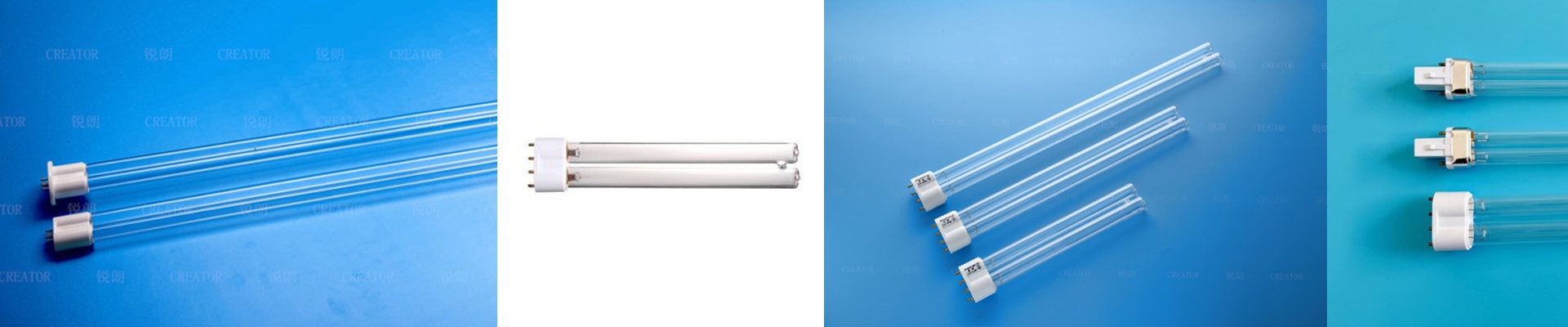
On the floor, time is money—every second counts. When the press is running 300 meters per minute, the ink has to go from wet to fully cured before it even reaches the folding unit. If the lamp can’t keep up, the job stops. Either the ink stays tacky and marks, or the cure lags and the substrate starts to warp. In industrial UV drying, you don’t chase the cure. The cure has to keep pace with the machine. That’s why mercury vapor lamps are still the workhorse. They deliver high-intensity output at wavelengths that line up with the absorption profile of common photoinitiators, so cross-linking happens fast—no waiting around for solvents to evaporate.
What actually matters under the hood
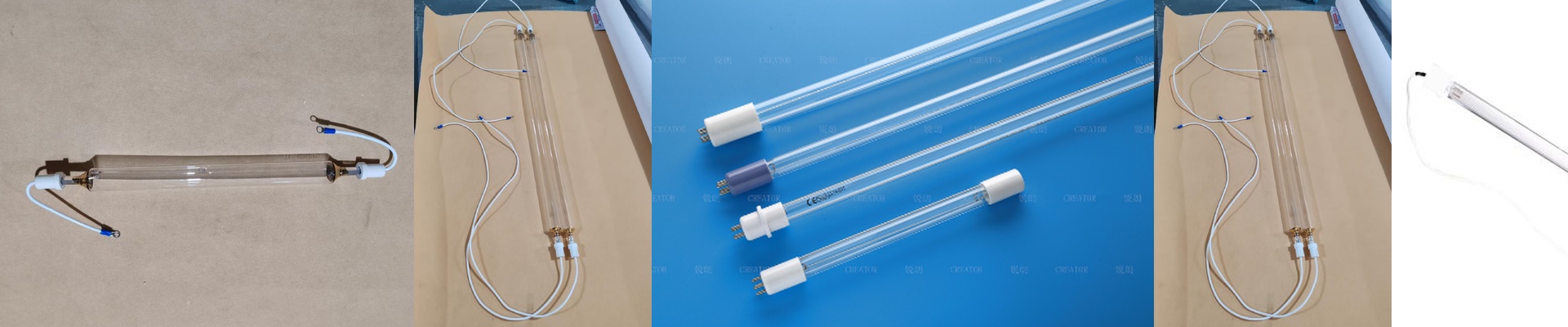
A mercury lamp for UV ink drying isn’t just “a light.” It’s a photochemical driver you control. The performance you feel on press comes down to three measurable things: spectral output, peak irradiance, and delivered energy density. **Spectral output.**Mercury lamps give you strong emission lines across the UV spectrum, with major peaks near 254 nm, 313 nm, and 365 nm. In real-world UV offset, flexo, and screen work, 365 nm is the dominant line. It penetrates deeper into the ink film, so you get surface-to-bottom cure in one pass. The 313 nm line helps speed up surface cure, and 254 nm can be useful for certain coatings and thin-film work—but it also means you need to stay sharp on thermal management and ozone control. **Peak irradiance.**This is the instantaneous power density at the curing plane, usually measured in mW/cm². High peak irradiance is what makes “instant cure” possible. It sets how fast free radicals are generated, and it defines the top press speed for a given ink formulation. If peak irradiance is too low, you can get a deceptive result: the surface looks dry while the ink underneath stays undercured. That’s how you end up with adhesion problems, blocking, or migration issues. **Delivered energy density.**Curing isn’t just about brightness—it’s about dose. Energy density, measured in mJ/cm², is irradiance multiplied by exposure time. Every ink and photoinitiator chemistry has a required dose to reach full cross-linking. The lamp system has to deliver that dose across the full web width, not just in the center. Reflector geometry and lamp alignment drive dose uniformity, and that uniformity is what keeps color stable and scratch resistance consistent sheet after sheet. **Deep penetration and complete cross-linking.**The 365 nm band is less absorbed by many binders and pigments than shorter wavelengths, so it penetrates deeper. That gives you simultaneous surface and bulk curing, which lowers residual monomers and produces a more stable film. The payoff isn’t some vague “quality boost.” It’s measurable: lower residuals, better block resistance, and more consistent DOI across the run. **It’s system engineering, not just a bulb.**The lamp is one piece. A production-grade curing station brings in a high-purity quartz arc tube, a dichroic-coated reflector to shape the beam and manage heat, and an ozone-free design—or a dedicated venting path—for safe operation in tight spaces. Output stability depends on stable arc current, consistent cooling airflow, and clean reflector surfaces. Get those details right, and cure repeatability becomes normal.
Why this fits the work we do
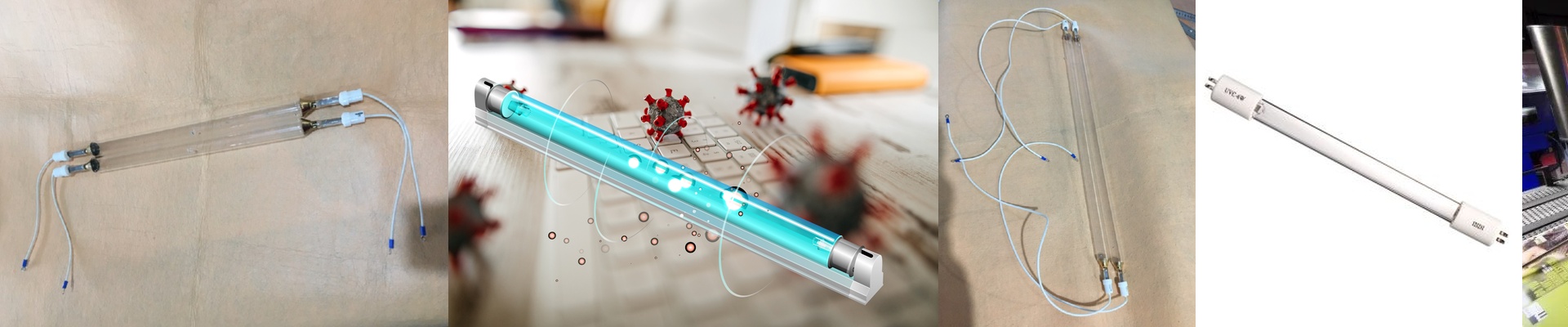
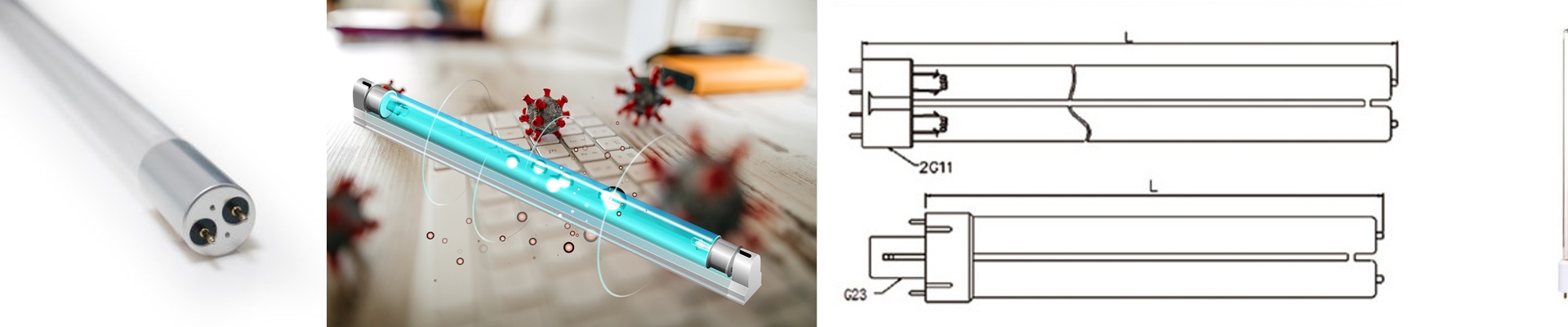
In air purification equipment manufacturing, the same UVC technology used for ink curing also does something different but mission-critical: disinfection. UVC at 254 nm disrupts microbial DNA and RNA, and in air-handling systems it’s used to inactivate pathogens on air and surfaces before air recirculates. The physics is shared. Whether you’re curing ink or disabling microbes, you’re delivering a precise photon dose at a specific wavelength. In an air purifier assembly plant, you’re running mixed materials—plastics, metals, adhesives, filters—and you can’t risk cross-contamination between processes. A solid UVC disinfection zone, at the right irradiance and dwell time, reduces bioburden on components and tooling, which lowers the risk of cross-infection during production. And for the printing and finishing lines that support these products—control panels, housing labels, filter frames, packaging—UV ink drying has to keep up with high-throughput scheduling. Mercury lamp systems give you the output headroom for:
- Instant curingat full press speed, so you don’t create a bottleneck between printing and downstream operations.
- Deep-cure penetration, so thick ink layers and pigmented formulations cure through, not just on top.
- Complete cross-linking, so the film reaches functional hardness and chemical resistance without off-gassing delays or extra dwell. The operational result is straightforward: fewer stoppages due to tackiness, less scrap from curing nonuniformity, and color that repeats because the dose stays stable shift after shift.
What you need to keep straight
Mercury lamp systems are dependable, but they’re not set-and-forget. Treat them like a precision instrument.
- **Match lamp output to ink chemistry.**If your ink set is optimized for 365 nm, running a lamp with too much 254 nm can drive surface cure too fast and trap uncured material underneath. If your formulation needs stronger surface initiation, 313 nm becomes more relevant. Check the spectral profile with your ink supplier, and measure cure with a radiometer.
- **Thermal management is non-negotiable.**High-intensity UV lamps throw off serious IR. If airflow is weak or cooling ducts are misaligned, you get substrate heating, dimensional changes, and even lamp overheating. Overheating shortens arc tube life and shifts output. Stick to the manufacturer-specified airflow, ducting, and temperature monitoring.
- **Ozone control needs attention.**Short-wave UV generates ozone. Ozone-free lamp designs and proper venting keep operator exposure down and protect nearby components. If you’re using 254 nm for curing or disinfection, don’t skip the exhaust path and O3 monitoring.
- **Lamp life is a curve, not a cliff.**Mercury lamp output declines with operating hours. Expect measurable irradiance drop after several thousand hours, depending on power profile and cooling. Plan maintenance around energy density targets, not just “lamp on” time. Track irradiance at the curing plane and replace when the dose falls below the ink’s minimum requirement.
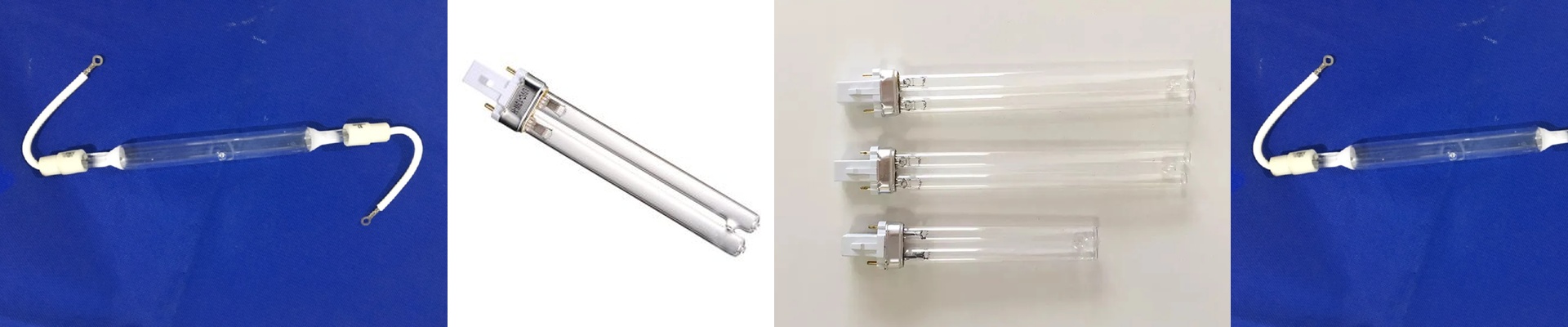
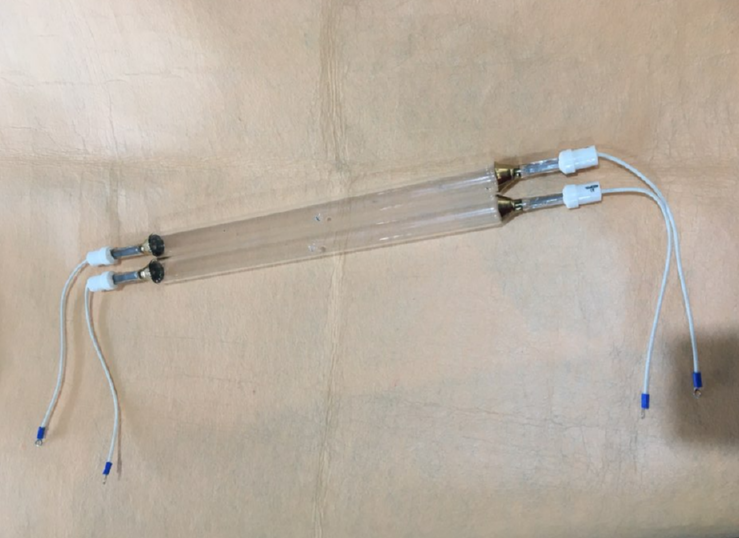
- **Compatibility is physical.**Lamp length, arc gap, end fittings, reflector geometry, and power connections must match the curing station. A mismatched lamp can under-illuminate the web, create hot spots, or cause electrical instability. Use the specified lamp for your press model, and document the replacement procedure. If you’re running UV ink drying at production speeds, the real question is whether the lamp is delivering the right dose, at the right wavelength, with the right stability. Mercury vapor lamps, engineered into a complete curing module, give you the intensity and spectral output needed for instant, deep, and complete cure—so the line keeps moving and the finish stays consistent.