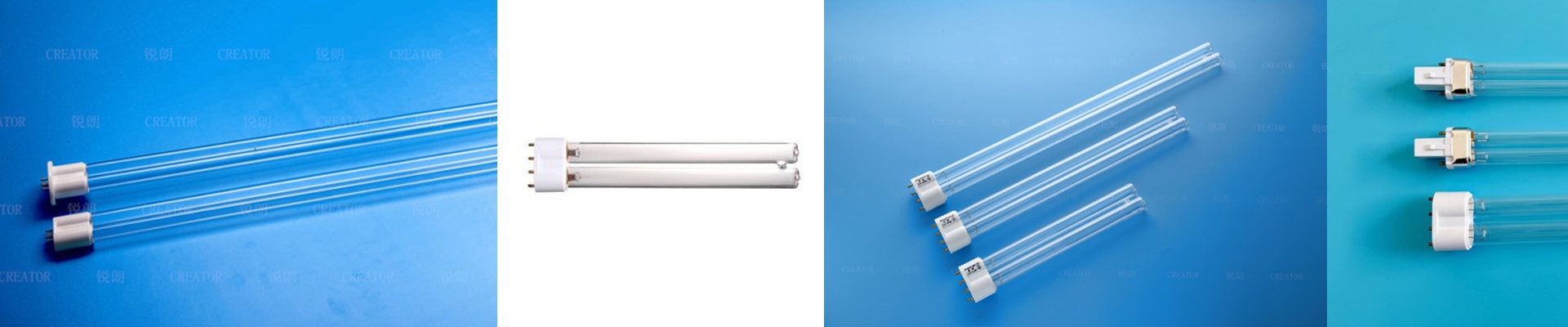
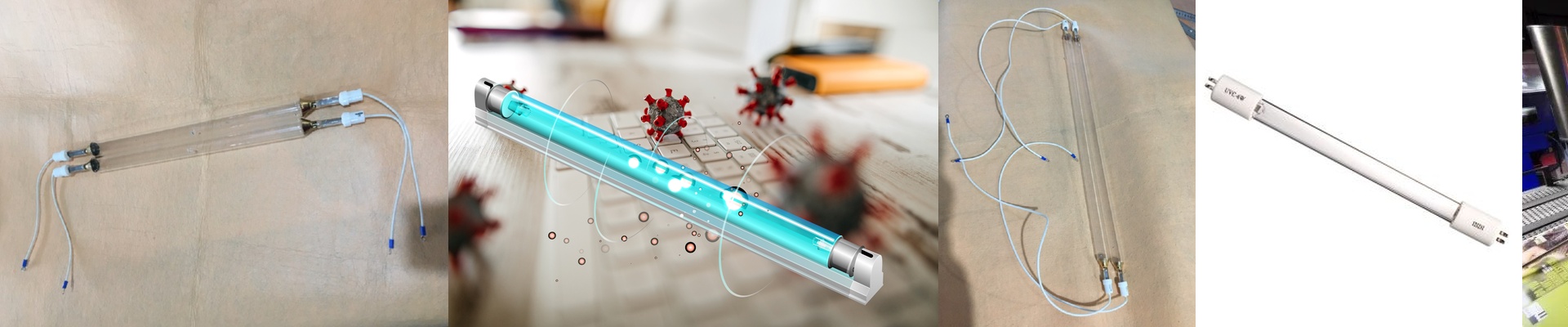
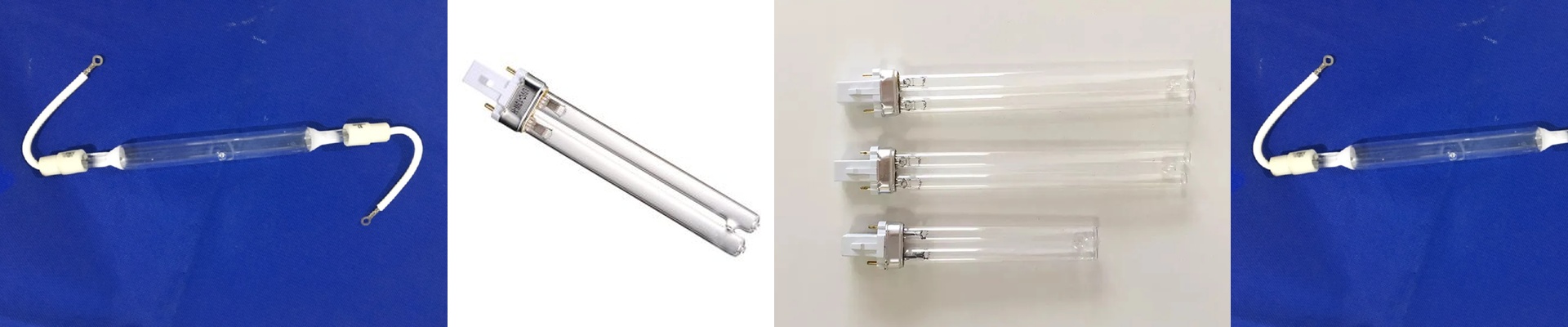
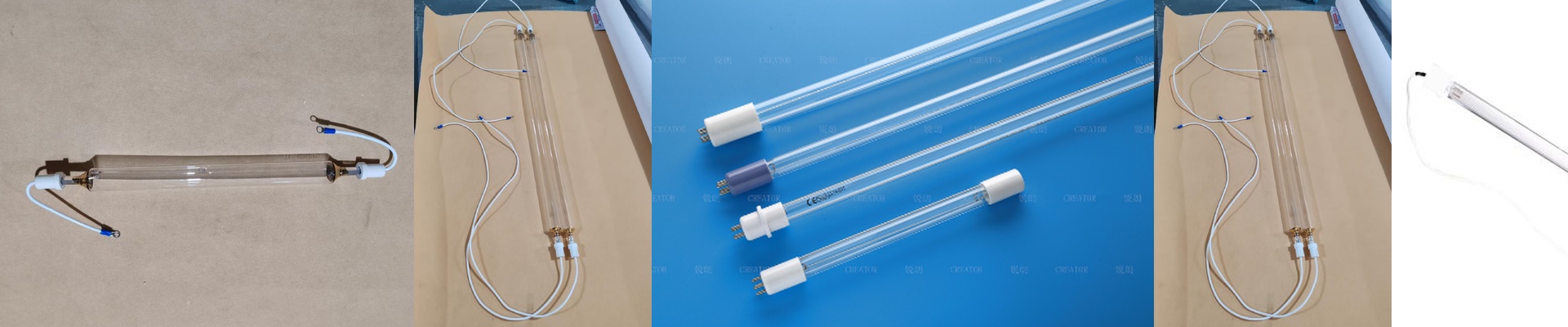
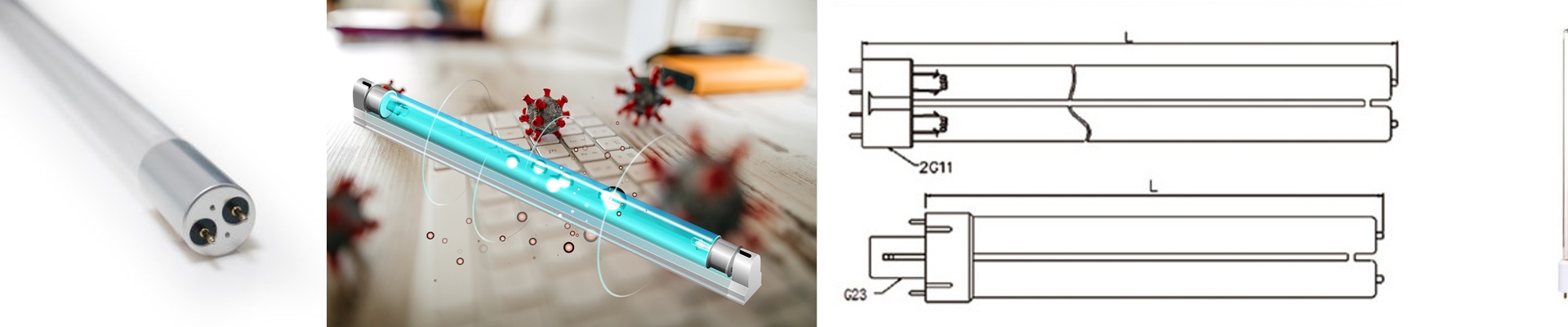
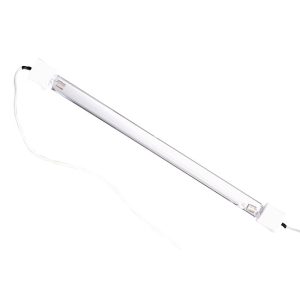
On the press floor, you’re running UV offset or flexo at line speed, and the curing system is supposed to be the steady part you don’t have to think about. Then the trouble shows up: uncured ink carry-over, a tacky surface that dusts and scuffs, and rejects climbing on jobs that used to run clean. You check lamp power, verify reflector alignment, and watch the shutter cycle. Often, the real problem is sitting right in front of the arc—a film of oil mist and particulate baked onto the lamp surface. UV lamps in industrial curing aren’t just heat sources. They’re precision photon emitters. When the tube is fouled, the spectral output gets choked, the effective irradiance at the substrate drops, and the energy density delivered to the ink falls below the photoinitiator threshold. The ink cross-links incompletely—even though the lamp still draws rated current and the PLC throws no fault. That’s where an industrial UVC germicidal tube—built for the reality of oil mist, dust, and continuous duty—earns its keep. Not by adding complexity, but by keeping the emitting surface clean and the spectral output stable, shift after shift.
What actually drives curing: wavelength, irradiance, and delivered energy
Curing performance comes down to three measurable things: spectral output, peak irradiance, and energy density at the substrate.
- Wavelength match: Mercury vapor lamps for UV curing have dominant emission lines, especially at 365 nm (UVA), plus output in UVB and UVC. Many photoinitiators are tuned to 365 nm, and cross-linking rate scales with absorbed photons at that line. If the lamp is weak at 365 nm—because of aging, poor fill, or fouling—curing slows even when total power looks fine.
- Peak irradiance: Measured in mW/cm² at the substrate plane, peak irradiance sets the photopolymerization rate. A drop from, say, 1,200 mW/cm² to 900 mW/cm² can push cure time beyond the dwell window at high press speeds, leaving surface tack.
- Energy density: Delivered dose in mJ/cm² is irradiance multiplied by exposure time. Every ink system has a threshold dose for full cure. When the lamp window is coated with oil and particulate, reflector efficiency drops and transmission falls, and the delivered dose can slip below that threshold. An industrial UVC germicidal tube is designed to hold UV output steady in dirty environments. The quartz envelope is chosen for high transmission in the UV spectrum and thermal stability, so arc temperature stays consistent through repeated on/off cycles. The fill chemistry is matched to deliver reliable output across the UV band—including the 254 nm line used for disinfection—while still supporting the 365 nm line that drives curing. Reflector condition matters as much as the lamp. A dichroic reflector tuned for UV output needs to stay clean and properly positioned. When the lamp surface is fouled, the reflector heats unevenly and reflectance degrades. Clean lamps, clean reflectors, and the right standoff distance keep energy density consistent across the web or substrate.
Why this matters: fewer curing failures and longer lamp life
Oil mist and particulate are unavoidable in industrial printing. Gearboxes vent, bearings throw fine grease, and solvents carry aerosolized residues. Those deposits land on the lamp and form a translucent film that scatters and absorbs UV before it ever reaches the substrate. A fouled lamp doesn’t just cut output. It creates a thermal gradient across the tube, stresses the quartz, and hastens end-of-life blackening. In many plants, lamps get replaced not because the arc is spent, but because the surface is so dirty the output is below spec. We build industrial UVC germicidal tubes for this environment with two practical goals: keep spectral output stable and make cleaning straightforward.
- Stable output despite fouling: The quartz envelope and fill system are engineered to run hot enough to discourage organics from condensing, and the tube geometry and mounting keep the emitting surface accessible. That slows the rate at which deposits harden and stick.
- Predictable cleaning cycles: The key to extending lamp life is a scheduled cleaning routine that removes films before they bake on. Done properly, cleaning can recover lost irradiance and keep the lamp inside its rated output window. In practice, that can stretch service life by about 30% compared with lamps that only get cleaned when defects show up. A solid cleaning cycle is simple, but it has to be disciplined:
- Cool the lamp to a safe surface temperature.
- De-energize and lock out the curing station.
- Wipe the tube with isopropyl alcohol and a lint-free cloth—use a single-direction pass so you don’t redistribute grease.
- Inspect the reflector and clean it with the appropriate solvent and a non-abrasive wipe.
- Reassemble, confirm standoff distance, and verify output with a spectral radiometer. When this is followed on a schedule that fits the press environment—often weekly in high-oil areas, biweekly in moderate conditions—the lamp stays within the specified irradiance band longer, and unplanned lamp changes drop. The payoff is measurable: fewer rejects from incomplete cure, more stable color and gloss because the dose per pass stays consistent, and maintenance that happens on your terms instead of in the middle of a run.
The practical details: fit, compatibility, and real-world constraints
Industrial UVC germicidal tubes aren’t plug-and-play across every system. They have to match the electrical and mechanical envelope of your curing station.
- Electrical compatibility: The lamp must match the ballast type and ignition method. Mercury vapor lamps in industrial curing typically run on regulated arc power supplies. Wattage, voltage, and connector type have to line up with the socket and wiring. Mismatched ballasts lead to unstable arc discharge, accelerated electrode wear, and reduced output.
- Mechanical fit: Length, diameter, and end cap style must fit the reflector assembly and shutter mechanism. If the lamp sticks out or sits too deep, reflector alignment is off, and irradiance uniformity falls apart.
- Ozone management: Many industrial UV lamps are ozone-free, using special quartz that blocks the 185 nm line. If your facility has ventilation limits, specify ozone-free tubes. If you need ozone generation for a specific process, that’s a different product path and has to be engineered accordingly. One constraint you can’t negotiate: cleaning is mandatory. Even with a tough lamp, oil and particulate will accumulate. The lamp will tolerate it better than standard tubes, but performance will drift if you skip cleaning. Treat the cleaning schedule as preventive maintenance, and log irradiance readings after each clean to track output decay. And remember, UVC output is hazardous to eyes and skin. Lamps must be fully shielded by the machine enclosure, and interlocks must work. Don’t bypass safety interlocks to “save time.” Shut down, lock out, and clean. Quartz is tough, but it’s not indestructible. Avoid abrasive contact, and never use solvents that attack lamp seals or reflector coatings. If the lamp has been severely overheated or contaminated with silicones, the surface can etch, and cleaning won’t bring output back. In those cases, replacement is the only way to get back to spec. If you want to stop chasing incomplete cure and unpredictable lamp life, treat the lamp surface as what it is: a critical optical component. Match the industrial UVC germicidal tube to your press, keep the window clean, and measure output with the same seriousness you apply to ink viscosity and registration. The payoff is stable curing, fewer stops, and a lamp that stays in service longer.